Wind in Essaouira: when it blows, why, and what to do about it
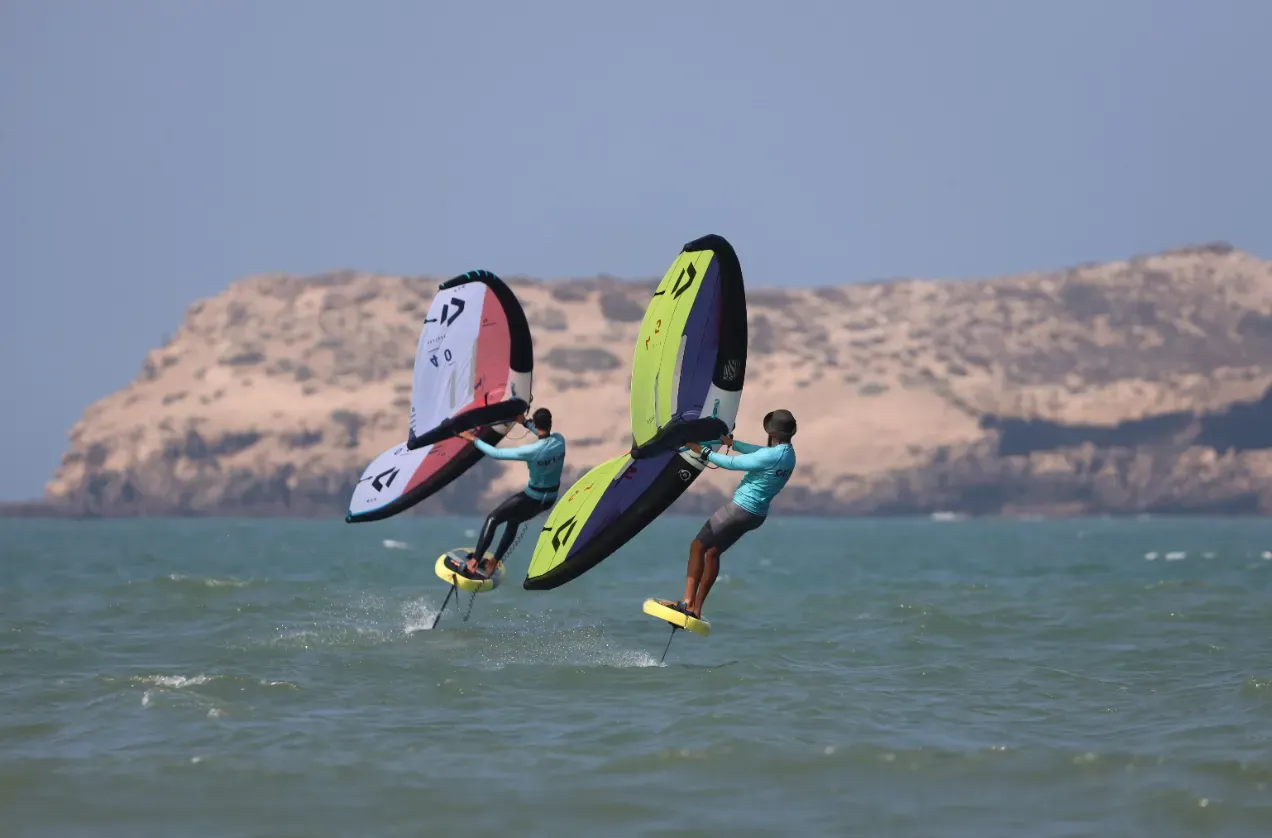
It is the question we get more than any other before a trip, usually with a note of worry in it: "I hear it's very windy there?"
It is. Essaouira is known as the Windy City of Africa, and that is not a tourist-board slogan. It is a fact of the weather, the same one that made this bay a strategic anchorage for centuries and later turned it into one of the world's great watersports playgrounds.
But there is a wide gap between "it's windy" and "the wind will ruin my trip". Here are the real numbers month by month, the time of day the wind picks up (the single most useful thing to know, and the one nobody tells you) and, above all, what people actually do here on the windiest days.
Why Essaouira is almost always windy
Three things combine, and none of them is going away.
The trade winds. Morocco's Atlantic coast sits under a steady north to north-northeast flow all year round. In Essaouira the wind comes off the sea, and nearly always from the same quarter.
The sea breeze. The ocean here is cold, between 17 and 21 °C depending on the season, never warmer. Inland, the ground heats up fast. That temperature gap pulls air in from the sea, and the bigger the gap, the stronger the wind. Which is why it blows harder in the afternoon than in the morning, and harder in summer than in winter.
The shape of the bay. Essaouira sits on a headland facing due west, with a long beach open to the north. The Purpuraires islands, just off the harbour, shelter part of the bay. The result is that conditions change completely from one end of the coast to the other, over just a few kilometres. More on that below: it is the most useful part of this guide.
Month by month
Climate averages for the town.
| Month | Average wind | Air, high | Sea | Rainy days |
|---|---|---|---|---|
| January | 18 km/h | 19 °C | 17 °C | 4.0 |
| February | 19 km/h | 19 °C | 17 °C | 3.5 |
| March | 20 km/h | 20 °C | 17 °C | 3.9 |
| April | 21 km/h | 21 °C | 17 °C | 2.3 |
| May | 22 km/h | 22 °C | 18 °C | 0.9 |
| June | 23 km/h | 23 °C | 19 °C | 0.2 |
| July | 24 km/h | 25 °C | 20 °C | 0.1 |
| August | 22 km/h | 25 °C | 20 °C | 0.2 |
| September | 19 km/h | 25 °C | 21 °C | 0.8 |
| October | 18 km/h | 23 °C | 20 °C | 2.6 |
| November | 18 km/h | 21 °C | 19 °C | 4.6 |
| December | 18 km/h | 19 °C | 18 °C | 4.7 |
These are 24-hour averages, nights included. A summer day is nothing like a steady 24 km/h. It is a calm morning followed by a considerably brisker afternoon.
Two things follow. The wind never really stops: even in October, the quietest month, it is still there. And the gap between the windiest and calmest months is small, 24 against 18 km/h. Looking for a wind-free window in Essaouira makes no sense. Looking for a gentler one does: October to March.
July is the windiest month. It is also the hottest and driest, and the wind is exactly what makes July breathable here while inland Morocco bakes. If you are still choosing dates, our full guide to the best time to visit Essaouira goes through what each season actually feels like.
What time does it blow? The real question
This is the part guidebooks never mention, and the part that changes how you plan a day.
Essaouira's wind follows a fairly reliable daily rhythm, driven by the sea breeze:
- From sunrise to mid-morning: the quiet window. Often a light breeze, sometimes nothing at all. The sea is smoother, the light is beautiful, the medina is a pleasure.
- Early afternoon: the wind fills in properly. This is when the sails come out.
- Late afternoon: the peak. Sand streams along the beach, parasols take off, and the kitesurfers are delighted.
- At sunset: it drops, sometimes all at once.
Which gives you a simple rule that organises a trip rather well: beach and medina in the morning, watersports or shelter in the afternoon, terrace in the evening.
Anything that needs calm water belongs to the morning. That is true of a traditional fishing trip, where the state of the sea decides everything, and of birdwatching at the river mouth, where the first hours are the best ones anyway.
The windiest days are the best days
What would be a flaw anywhere else is the raw material here. Essaouira's international reputation rests on that reliability: dependable wind, open water, and a bay big enough for everyone.
Kitesurfing is the bay's signature sport, with clear water and an easy launch area, and it is a genuinely good place to learn, precisely because the wind is steady rather than gusty.
Windsurfing is the historic one, the sport that put Essaouira on the map in the 1980s, and still the best call when it really honks.
Wingfoiling is the discipline on the rise, more approachable than it looks, and ideal in the moderate winds of spring and autumn.
Surfing works the other way round from the other three: it is a morning sport here, before the wind has chopped up the water and while the Atlantic swell is still clean.
In other words, there are no lost days. There are days when you surf in the morning and kite in the afternoon.
Where to find shelter: it is a matter of a few kilometres
This is the local knowledge worth paying for, and it fits in one line: in Essaouira you don't escape the wind, you move.
The southern end of the bay, towards Diabat, is markedly more sheltered than the north. The long town beach is exposed along its whole length, but the further you walk towards the river mouth and the dune, the more the pressure eases.
Inland, fifteen or twenty minutes by road, is another world altogether. In the argan forest the trees break the flow and it is simply warmer. At the Ain Lahjer oasis, set down in a hollow, you barely feel the wind at all.
The harbour and the foot of the ramparts hide leeward corners where you can have a calm lunch on a day the beach is unusable.
Two places, on the other hand, are more exposed than the town, which is exactly what they are for: Sidi Kaouki to the south and Moulay Bouzerktoune to the north, two well-known spots that take the wind head-on. Our guide to Essaouira's beaches sets out which one to pick depending on what you are after.
And to cover ground from one shelter to the next without losing the day to it, a buggy ride along the coast solves the problem and turns it into an outing in its own right.
What to do when it blows too hard for the beach
A good half of what makes Essaouira interesting happens indoors, and those are often the days people remember.
- A pottery workshop. It is the activity that works best on windy days: two or three hours at the wheel, and you leave with your own piece.
- A Moroccan cooking class, from the spice market through to the dish on the table.
- An embroidery workshop, including with the medina's solidarity cooperative, where the encounter matters as much as the technique.
- A hammam and a traditional treatment, detailed in the hammam and traditional treatments. You have to have understood something about the local climate to see why the hammam matters so much here: it is the exact opposite of a windy day.
- A wellness and massage session, when you simply want to switch off.
- An escape game in the medina, which works beautifully with family or friends.
- A guided medina tour. Those narrow lanes are naturally sheltered, and that is part of why they were laid out that way.
- The traditional markets, where you will spend longer than you planned.
What to pack
Short list, and it prevents most of the unpleasant surprises.
- A light windbreaker, every season. August included.
- A warm layer for the evening: nights drop to 20 °C at the height of summer and 10 °C in January, and the wind makes it feel cooler still.
- A rash vest or wetsuit if you plan to swim. The sea runs between 17 and 21 °C year-round.
- Sunglasses that stay on, and something to protect a camera: airborne sand is what actually kills gear here.
- A hat with a chin strap. Without one, it ends up in the ocean. That is a rule, not a joke.
So, is the wind a problem?
Honestly: only if you came looking for a still, Mediterranean-style beach. That is not what Essaouira is, and it has never pretended otherwise.
The wind is what keeps the town at 25 °C when the rest of Morocco is at 40. It is what brought the surfers, then the artists, then everyone else who finds a coastline here that still feels alive. It also explains the ramparts, the harbour, the light, and that particular sense, unique to Essaouira, that the town is breathing.
The question is not whether it will be windy. It will. The question is what you do with it, and that part can be planned. For a sheltered afternoon, our guide to the pottery workshop covers the workshops, and Essaouira on a rainy day lists every indoor activity.