Essaouira in the rain: what to do when the sky turns grey
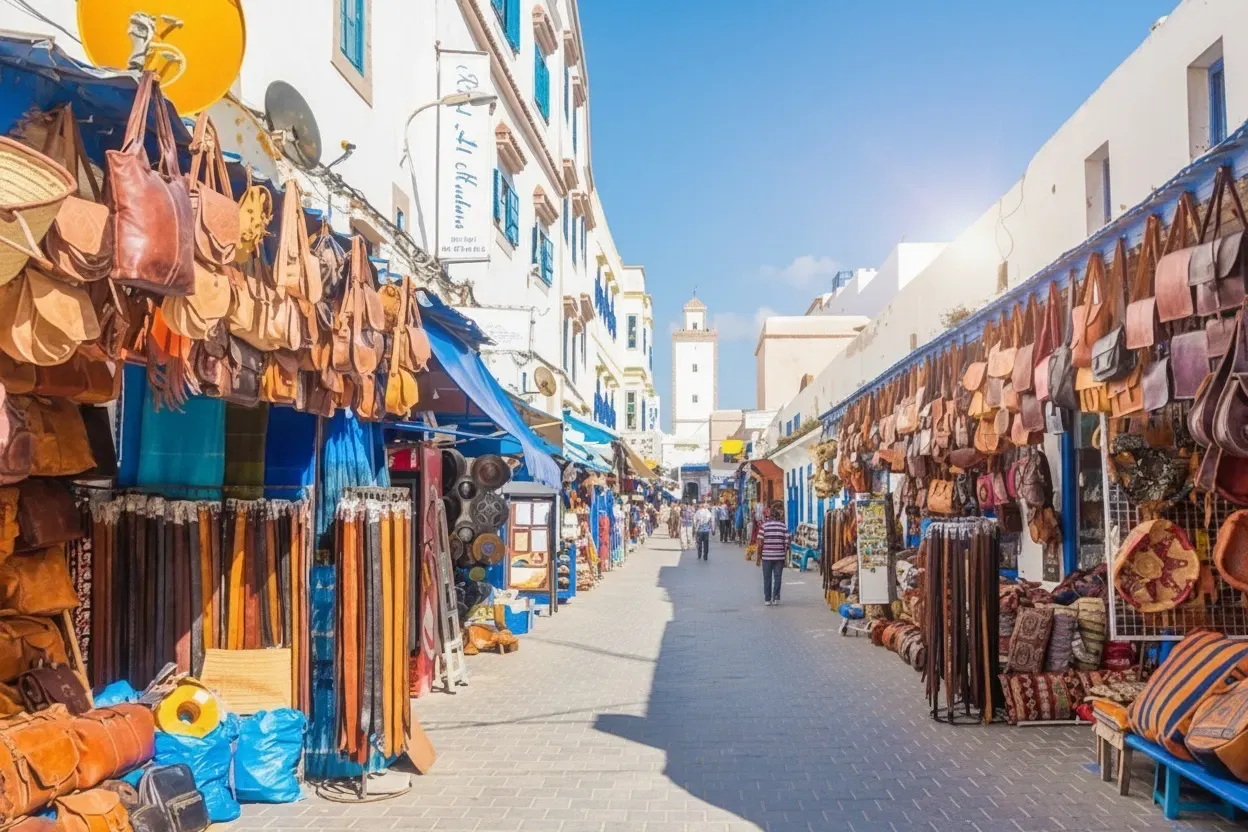
You have booked your trip and the forecast has turned. Before you cancel anything, look at the actual numbers: Essaouira gets a handful of wet days per month between late October and early April, in short showers, with daytime highs of 19 °C. If your reference for a rainy day is Manchester or Brussels in January, this is not that.
Better still, this is one of the few places where the plan B is often better than the plan A. The medina empties, the workshops fill, the hammam finally makes complete sense, and the wind, which is the real constraint of this coast, drops away. This guide gives you the rainfall figures with their sources, then the exact replacement for every activity the weather has just cancelled. Wind is a separate subject and has its own dedicated guide.
How often does it actually rain in Essaouira?
The wet season runs from 19 October to 9 April according to Weather Spark, which counts a day as wet when the probability of precipitation exceeds 9 %. From 9 April to 19 October, rain is the exception. Two climate references give slightly different figures, so here they are side by side, because the gap tells you something.
| Month | Rain, mm (Weather Spark) | Rain, mm (Climats et Voyages) | Wet days (Climats et Voyages) |
|---|---|---|---|
| January | 30.7 | 45 | 7 |
| February | 27.7 | 40 | 7 |
| March | 22.1 | 35 | 7 |
| April | 13.1 | 30 | 6 |
| May | 5.7 | 10 | 3 |
| June to August | 0.2 to 0.7 | 0 to 2 | 0 to 1 |
| September | 3.5 | 5 | 2 |
| October | 15.3 | 25 | 5 |
| November | 36.0 | 50 | 7 |
| December | 35.5 | 55 | 7 |
Weather Spark separately counts 4.6 wet days in November, the wettest month of the year, against 0.1 day in July. The gap between the two references comes from where each one sets the threshold for a wet day, not from any disagreement about the climate. Two things matter more than the decimals:
- rainfall is concentrated in six months, and November and December absorb roughly a third of the annual total;
- even at its wettest, that is 4 to 7 wet days in a month, which leaves 23 to 26 dry ones.
If your question is really about when to come rather than how to handle one bad morning, our guide on when to visit Essaouira breaks down the four seasons, and Essaouira off season explains why some travellers now come deliberately in winter.
What a rainy day here actually feels like
This is the part the forecast apps leave out, and it changes the whole calculation.
- Showers, not a write-off. Rain here arrives in short bursts, sometimes heavy (Climats et Voyages). You lose two or three hours, rarely the day.
- It is mild. December, January and February share the same average high of 19 °C, with lows of 10 to 12 °C (Weather Spark). You will not be cold, you will be wet, which is a different and much more solvable problem.
- There is still sun. November, December and January average 6.5 hours of sunshine per day (Climats et Voyages).
- The light is better, not worse. The cloudiest stretch of the year runs from 9 September to 24 May, the clearest from 24 May to 9 September (Weather Spark). Expect more dramatic skies, which is good news if you take photographs.
- The wind drops. Climate references describe Essaouira's wind as primarily a summer phenomenon, in the form of afternoon breezes (Climats et Voyages). For a town nicknamed the windy city, that trade is often worth making.
What about the 2026 to 2027 winter? Be sceptical of the headlines. The World Meteorological Organization gave a 90 % probability in early September of a very strong El Niño through autumn and winter. Morocco's national meteorological service pushed back on 4 October 2026: no direct relationship has been established between El Niño and Moroccan winter rainfall, the North Atlantic Oscillation matters more, and the autumn seasonal outlook points at the north and above all the northeast of the country, not the central Atlantic coast (Le Matin). For reference, the same service's own review ranked the previous winter as Morocco's third wettest since 1981, with a national average of 136 mm from December to February against a 71 mm normal. Nobody can tell you today whether it will rain during your stay, which is exactly why you want a plan B rather than anxiety.
Your plan A, and the plan B that replaces it
| What you had planned | The rainy day swap | Why it is sometimes better |
|---|---|---|
| Beach, swimming, sunbathing | Hammam and treatment | The contrast between cold outside and steam inside is the entire point of the ritual |
| Coastal walk at Sidi M'Barek | Pottery workshop | The trails get slippery, and clay does not care about the sky |
| Buggy, quad or sandboarding in the dunes | Escape game in the medina | Same tension, same teamwork, under a roof |
| Port, ramparts and fish market on your own | Guided medina tour | A guide knows the covered passages and reroutes you on the spot |
| Lunch on a terrace | Cooking workshop | You cook your lunch instead of hunting for it in a downpour |
| Birdwatching | Solidarity embroidery workshop | Same patience, same eye for detail, sitting down and dry |
| Surf or kitesurf session | Yoga and massage or Pilates | Your body still works, and yesterday's aches will thank you |
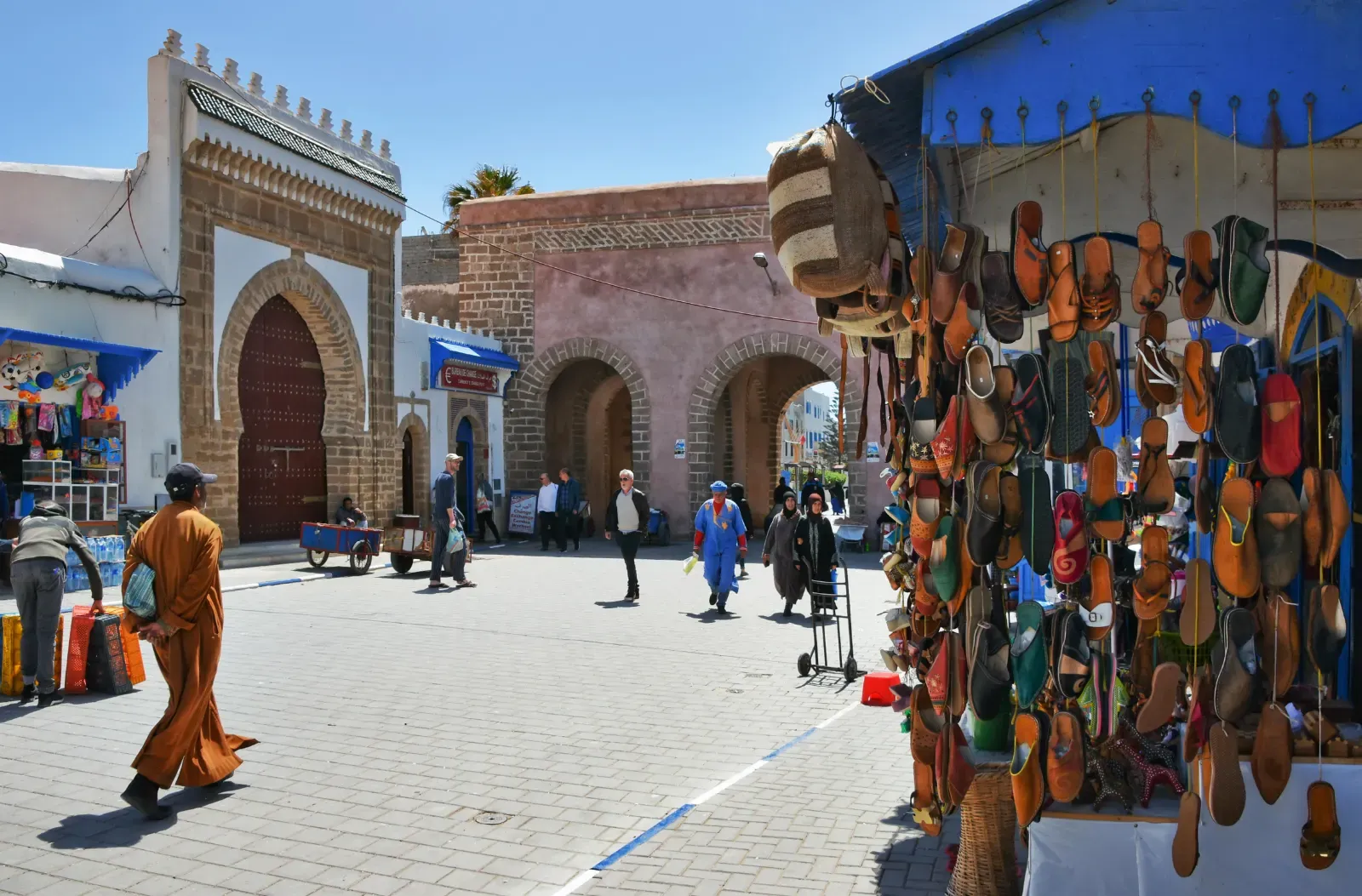
| Browsing the lanes | Traditional markets | The souks are largely covered, and the sellers have time for you |
The four things worth booking the moment rain appears in the forecast
- The hammam, if you only pick one. It is the single item on this list that is genuinely better in bad weather than in good. Two ways in: the azur treatment for the full sequence, or the wellness traditions for the local ritual. Our hammam guide explains the steps, the etiquette and what nobody tells you beforehand.
- A craft workshop, to occupy your hands. Pottery and solidarity embroidery share one virtue: ten minutes in, you have stopped thinking about the weather. Pottery sessions run Monday to Saturday between 10 am and 5 pm according to their page, so an 11 am shower costs you nothing if you booked the night before, and our pottery workshop guide helps you pick the format. If you would rather draw or personalise an object, the artistic expression workshop and the basket embroidery workshop do the same job. Our article on Essaouira, city of artists explains why these trades gathered here.
- A cooking workshop, to turn lunch into the activity. The most underrated rainy day move: instead of running between restaurants in the wet, you spend the morning making what you are about to eat. See the cooking workshops.
- The escape game, if there are several of you. This is the answer for families and groups who had booked quad bikes and are now circling the riad. See the medina escape game.

The medina in the rain is the medina at its best
Locals know this and visitors discover it by accident. A tightly built medina, with narrow lanes and high walls, shelters itself: rain arrives in bands rather than sheets. Three things improve at once.
- The white walls and blue shutters saturate. This is the best light of the year for photographing Essaouira, and you will have the lanes to yourself.
- The artisans are at their benches, and the souks are largely covered. You can study a stall without being pushed along by a crowd.
- The cafés fill with Souiris rather than visitors. One tea, half an hour at a counter, and you will learn more about the town than on three tours.
Two cautions, because useful advice includes the warnings: the medina's paving and the Skala steps get properly slippery, so bring soles with grip, and some lanes collect water at the bottom of a slope for as long as a heavy shower lasts.
When the shower stops at noon
This is the most common scenario, and the one where the whole day is recovered.
- The town dries fast and the beach is yours. At 19 °C with little wind, the ramparts and the port are walkable again inside an hour, and the sand stays empty for a good while. Our local beach guide says which one to pick.
- The hinterland needs a check first. The argan forest is excellent after rain, the ground absorbs and the smell is better, but some tracks turn to mud. Ask about the state of them on the day.
- Moving without getting soaked changes everything. A private transfer or a rental car lets you shift an activity by an hour instead of cancelling it. That single reflex is what saves a wet day.
What to postpone without regret
We would rather say this before you book than at the refund stage.
- buggy and sandboarding: wet sand does not slide, and visibility drops;
- the coastal walk at Sidi M'Barek: the descent uses trails that do not take kindly to rain;
- traditional fishing: rain is not the deciding factor, the state of the sea is, and the two often arrive together;
- birdwatching: the birds are sheltering too, so go the next morning instead.
A ten-minute plan the night before
- Read the forecast the evening before, not at breakfast. A shower pencilled in for 9 am and rain all day do not call for the same programme.
- Book the indoor slot the night before, and keep one outdoor option in reserve. Workshops run on fixed slots, and a wet morning is exactly when everyone calls at once.
- In the bag: a light waterproof jacket rather than an umbrella, which is useless the moment there is any wind, shoes with grip, a bag that closes, and something to keep a phone dry.
- Budget for the swap. Our cost of a day in Essaouira article prices every line, and our three day itinerary shows how to shift a whole day without wrecking the rest.
Plan your rainy day
Tell us which day you are here, how many of you there are, and what the forecast has just cancelled. We will suggest the closest replacement to what you came for, not the most expensive thing in the catalogue.