Essaouira day trip from Marrakech: is it worth it, and how to do it right
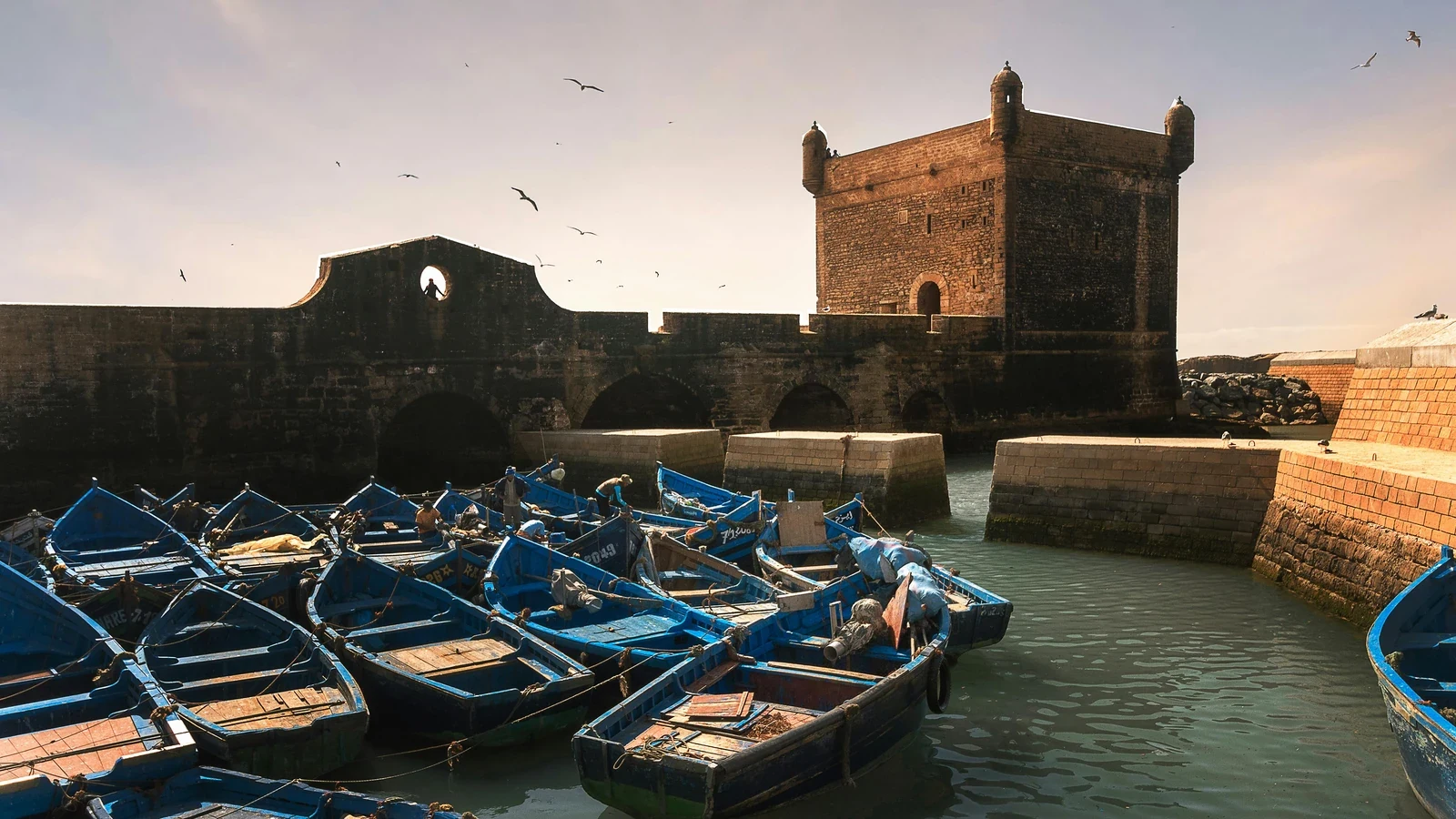
It is one of the most common questions for anyone based in Marrakech: can you see Essaouira in a single day, or does it deserve a trip of its own?
The honest answer comes in two parts. Yes, it is doable, and thousands of people do it every week. But a day in Essaouira from Marrakech is not a full day in Essaouira: it is around five hours of driving there and back, and five to six hours on the ground. The whole game is not wasting those precious hours, neither on the road nor hunting for somewhere to have lunch.
Here are the real distances, the four ways to get there compared side by side, what you will see on the way, and a day plan that actually holds together.
Is a day trip really the right call?
Let us start with the real question, the one no tour desk asks out loud.
A day is enough to understand Essaouira. You can cross the medina on foot in an hour, the harbour and the ramparts sit side by side, and the mood of the place lands fast.
It is not enough to live it. No sunset on the ramparts, no morning on the beach, no idle hour on a terrace. And that is often where Essaouira becomes unforgettable, which is why we come back to it at the end of this guide.
So here is the rule of the day: a day trip is a lovely idea, as long as you set it up tightly. Leave early, pick the right transport, and aim for the essentials rather than everything.
How long does it take to reach Essaouira
One road, due west, and no nasty surprises.
- The distance: about 190 kilometres between the two cities.
- The time: two and a half hours in normal conditions, often closer to three once you add the Marrakech outskirts, a stop, and the final stretch.
- The route: the N8 heading west, dual carriageway for much of the way. Chichaoua, roughly halfway, is the natural place to stop for coffee, fuel or a break.
- The terrain: none to speak of. This is not a mountain pass, it is a plain sloping gently down to the Atlantic. The road is good and easy going.
Two and a half hours is neither Marrakech itself nor next door. It is exactly the distance that makes the day possible but tight, and that rewards anyone who leaves early. If you are coming up from the south rather than from Marrakech, our Essaouira or Agadir comparison says how many nights to plan in each town.
Getting there: four options compared
Four ways to make the drive, and the right one mostly depends on your relationship with time and organisation.
| Option | Door to door | Flexibility | Best for |
|---|---|---|---|
| Private transfer with a driver | about 2.5 hrs | Total: leave and return when you like, stop where you want | Families, first visits, anyone who wants zero logistics |
| Car rental | about 2.5 hrs | High, but you drive and you park | Independent travellers, road trip lovers |
| Supratours bus | about 3 hrs | Low: fixed timetable, a few departures a day, station to station | Small budgets, travellers with no time pressure |
| Shared group excursion | about 3 hrs plus stops | None: set programme, sales stops | Those who want everything included and nothing to organise |
Two things worth knowing.
The bus leaves from the Supratours station next to Marrakech train station and drops you a short walk from the Essaouira ramparts. It is the cheapest option and the least flexible: book ahead in high season, and build your day around its times rather than the other way round.
For a single day, a private transfer almost always gives the best trade of time for peace of mind: no parking to find, no last bus to miss, and a driver who knows the good stops along the road.
What you will see on the way
The road is not just a transfer, it is already part of the trip.
- The argan trees. Past Chichaoua they slowly replace the olives. The argan tree grows only in south west Morocco, and the know how tied to it has been on the UNESCO intangible cultural heritage list since 2014. The argan forest itself can be visited on the Essaouira side.
- Goats in the trees. You may spot goats up in the argan branches, an image that has travelled the world. Let us be honest: close to the road, the scene is often staged for the photo and the tip. The phenomenon is real, and so is the set up.
- Argan oil cooperatives. Several line the final kilometres. Some are genuine women's cooperatives, others just shops. A local driver will steer you to the good ones.
- The arrival. The ochre ramparts appear all at once, facing the ocean. It is one of the finest city thresholds in Morocco, and it sets the tone perfectly.
A day, hour by hour
A plan that leaves time for the town, not only for the road.
- 8 am: leave Marrakech. The earlier you go, the longer your day on the ground. That is the only real lever you have.
- 10.30 to 11 am: arrival. Leave the car at the edge of the medina, which is entirely car free.
- 11 am to 1 pm: the UNESCO listed medina, Place Moulay Hassan, the Skala de la Ville with its cannons facing the sea, the fishing harbour and its blue boats. A one or two hour guided medina tour hands you all the keys and saves you going in circles.
- 1 pm: lunch. Grilled fish of the day near the harbour, or a quiet table in the medina.
- 2.30 to 4.30 pm: either wander the souks and markets for thuya woodwork and argan oil, or take a short pottery class or cooking workshop, two short formats that fit a half day.
- 4.30 to 5 pm: a last tea by the sea. Mind the wind, which fills in during the afternoon and cools the seafront quickly, even in high summer.
- 5 pm: departure, to be back in Marrakech around 7.30 or 8 pm, before dark.
What fits in a day, and what does not
Better to know beforehand, so you do not drive home frustrated.
Fits easily:
- The medina, the ramparts, the harbour and Place Moulay Hassan.
- An unhurried fish lunch.
- One market, or one short workshop.
Does not fit, and best to accept it for this time:
- Watersports. A surf session or a kitesurf lesson needs a half day and a trip out to the beach, hard to slot into a round trip from Marrakech.
- The southern beaches, Sidi Kaouki, or a buggy ride along the coast. All superb, but they want time the day does not have.
- Trips around Essaouira. Keep them for a proper stay.
Our beach guide lays out which ones are worth it if you decide to stay longer.
And if you come back for the waves, our guide to which surf spot suits your level will tell you where to go.
The best advice, if you can: stay one night
We will say it almost against our own interest: Essaouira is best earned in the evening. When the coaches leave around 5 pm, the town changes face. The ramparts glow, the terraces fill with locals, and the wind drops all at once.
One night on the spot, and you gain a sunset over the Skala, a calm morning before the visitors arrive, and time for a hammam and treatment at the end of the day. Our guide to three days in Essaouira shows everything that opens up the moment you do not leave the same evening. And if you are still unsure about dates, our guide to the best time to visit will help you pick your season.
Practical notes
Four habits that prevent half the bad days.
- The best day: midweek and outside school holidays, when the road and the medina are both quieter. Weekends fill up everywhere.
- What to bring: a light windbreaker even in summer, because the seafront is cool in the afternoon, good shoes for the lanes, and sunglasses.
- The timing: leave early, head back before dark. The N8 drives well by day, less happily once night falls.
- The time budget: be generous with the drive. Half an hour of margin keeps you from rushing all day.
To budget the day on the ground, our piece on how much a day in Essaouira really costs lists real activity prices.
So, a day or a stay?
If you are based in Marrakech and you only have one day, go for it: a well organised day gives a real taste of Essaouira, and many people leave promising themselves they will come back. Set off early, choose the transport that suits you, and do not try to see everything.
If you can free up one night, do it without hesitating. The difference is not in the number of sights ticked off, it is in the hour when the town empties and becomes a little bit yours.
Either way, the essential is the same: plan the road so that it leaves you time on the spot.